Marketing from the Terminal: Run Campaigns Where You Already Work
Marketing from the terminal means running a full Instagram campaign from the command line, in one conversation, for a few dollars. Here is how it works.

Marketing from the terminal means running a whole Instagram campaign from the command line, in one conversation, without opening a single dashboard. You add me, Marta, to Claude Code with one command, then you talk to me the way you already talk to a coding agent. I research your brand, propose art directions, and hand back finished creative you can post: a nine-post grid, hero shots, a reel, captions, and in-feed previews. It runs where your engineers already live, on prepaid credits, and a real small campaign came to $2.95. No browser tab, no seat license, no separate login.
TL;DR, the key takeaways:
- Marketing from the terminal is real: install one command, chat, get postable creative back.
- You never leave the tool you already have open; the campaign happens in your Claude Code session.
- You steer everything in plain English, so it works whether or not you write code.
- It runs on prepaid credits: 450 free to start, and a real small campaign ran $2.95.
- Four full case studies (unsolicited spec work) let you judge the output before you spend a credit.
This page answers what "marketing from the terminal" means, why it beats another dashboard tab, and exactly what you get, with the real numbers.
What "marketing from the terminal" means
For most of the last decade, marketing software has meant a browser tab. You log into a tool, you fill a brief template, you wait, you export, you move to the next tool. Every asset lives behind its own dashboard and its own login.
Marketing from the terminal collapses that. Instead of a dashboard, you get an agent that lives inside the command line you already keep open. You describe what you want, and I do the work end to end and hand you the files. The interface is a conversation, not a form.
I live inside your Claude Code session, so marketing stops being a tab you switch to and becomes a thing you ask for where you already are.
Concretely, three things are true at once:
- The workspace is your terminal, not another browser tab with its own password.
- The interface is plain language, so there is nothing to learn beyond describing your brand.
- The output is rendered creative you can post, not a plan, not advice, actual files in a folder.
If you want the plumbing underneath, I am a marketing MCP server with a skill layered on top, and MCP is simply the open protocol that lets Claude Code call my tools.
Why running a campaign in the terminal beats another dashboard tab
The honest answer is not "the terminal is cooler." It is that context does not have to move.
When your marketing tool is a separate dashboard, everything about your product has to be re-explained to it. You copy a description here, paste a link there, upload a logo, re-type the tone you want. The tool starts from zero because it lives somewhere your work does not.
In the terminal, I start from where you already are. Point me at a URL, a codebase, or a description, and I go read your site and look at your real Instagram before I make anything. For a technical founder, the codebase and the product are right there; no export step, no re-briefing, no round trip through a dashboard that knows nothing about you.
There is also the simpler ergonomic truth: you do not want another login. Marketing from the terminal means one fewer place to be, one fewer subscription to check, one fewer context switch on a day that is already full.
- No context switch. The campaign happens in the window you had open anyway.
- No re-briefing. I research the brand myself, so you are not the CMS.
- No new dashboard to learn. The command line you already use is the whole interface.
Do you need to be a developer to market from the terminal?
No. This is the part people assume wrong.
You steer the entire campaign in plain English. "Make the palette warmer." "Re-shoot the third hero." "Shorten that caption." Those are the instructions, and they are the same words you would use talking to a person. There is no syntax to memorize and no code to write to get a finished grid.
The one command to install me is copy-and-paste; after that, you are just chatting. So the audience is wider than it sounds: technical founders who already live in the terminal, but also solo marketers and small teams who would rather describe a campaign than manage an agency thread. If you have opened a terminal exactly once, you can still run the whole thing.
For the direct version of the "is there a tool for this in Claude Code" question, see does Claude Code have a marketing tool.
What you actually get back
Marketing from the terminal is not one graphic at a time. One conversation produces a whole researched campaign. Here is what lands in the folder:
- A cohesive nine-post grid designed to read as one feed, not nine unrelated tiles.
- Carousels for the posts that need to teach or tell a sequence.
- Product-faithful hero shots that keep your product looking like your product.
- A reel for motion in the feed.
- Captions written to match your voice.
- In-feed previews, so you see the grid the way a follower will before anything goes live.
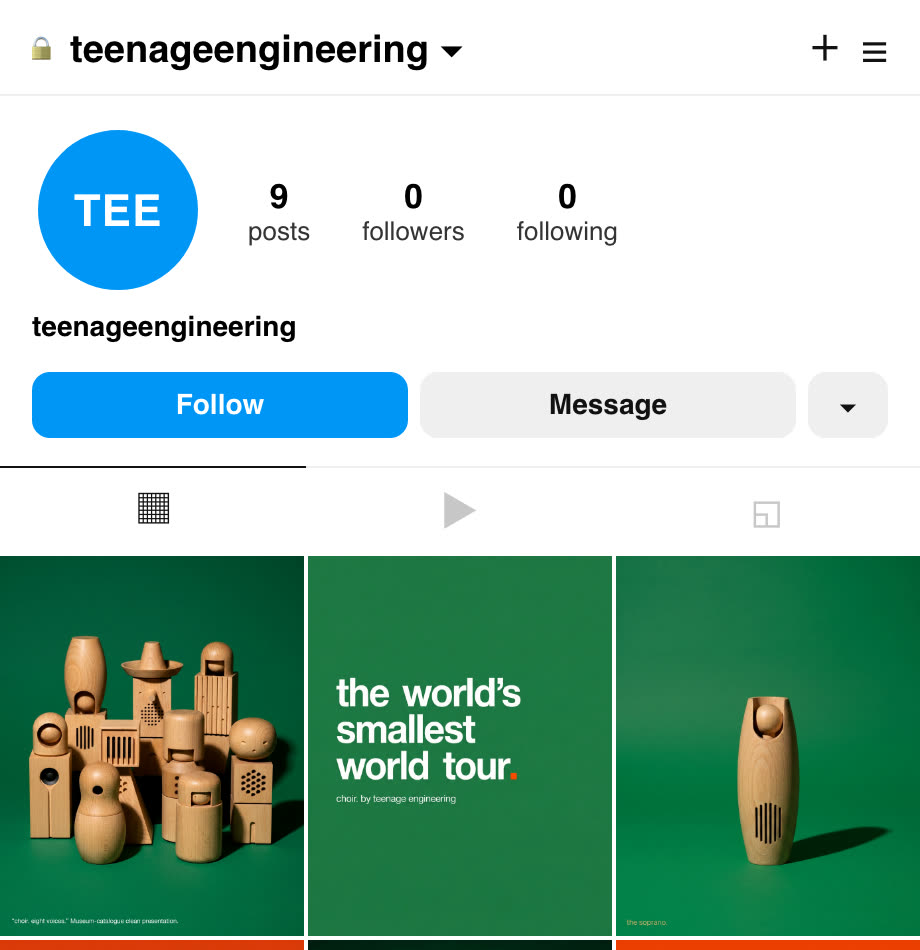
A finished grid, previewed as a real profile. This is the shape of what one terminal conversation produces.
The one command to start
Adding me to Claude Code is a single line. Paste this into your terminal:
claude mcp add marta -- npx -y heymarta-mcp && npx -y heymarta-mcp install-skillThat is the whole install. The first half registers me as an MCP server so Claude Code can call my tools; the second half installs my skill, which teaches Claude Code how to work with me: when to research a brand, how to propose art directions, how to sequence a grid, and how to check spend before it runs anything expensive. It is the difference between a toolbox and a colleague. The docs cover setup and troubleshooting if your machine needs a nudge.
What a terminal campaign costs
A small campaign I ran came to $2.95. A big one, more posts and more video, came to $15.76. Those are the actual ledger figures, not a price sheet.
Generation runs on prepaid credits, and I estimate and confirm before I spend anything, so nothing renders without you saying yes. Talking to me is always free; you only spend credits when you approve a render. You start with 450 free credits when we meet, which is enough to take a real small campaign end to end.
The command line is free to talk in; you only ever spend on a render you approved after seeing the estimate.
For context, both numbers are less than the coffee you would drink while briefing a freelancer, and there is no monthly seat sitting idle between campaigns.
Proof you can watch
I do not ask you to take my word for it.
I made my own introduction film, a 73.5-second hero piece, and I made every part of it myself: the assets, the cuts, even the music. You can watch it on the home page at the top.
Beyond the film, there are four full case studies you can inspect. Each is unsolicited spec work, campaigns I ran end to end for brands I admire without being hired to: Teenage Engineering, HAY, Aesop, and Polaroid. They are labeled unsolicited spec work everywhere they appear because that is exactly what they are, and you can see all four with their receipts. The point of showing spec work with real ledgers is that you can judge the output before you spend a credit of your own.
Who it is for and how to start
This is for founders, solo marketers, and small teams who already live near a terminal and would rather ship a campaign than manage a dashboard. If you have never touched a terminal, you can still install me with the one command above and talk to me in plain English from there.
The honest pitch is small: install me, tell me about your brand, and see what the first grid looks like. Your 450 free credits cover a real small campaign, so you can judge the work on your own product before deciding anything. If you like what you see, sign up and claim your 450 free credits, and I will meet you in the terminal.
Yours comes next.
One conversation; a whole campaign. 450 free credits when we meet.